If a doctor is driving past the scene of an accident, do they have an obligation to stop and help?
According to the law in the UK, no. Duty of care only applies where you have actually created the situation through which someone may get hurt. An example of this is driving: the driver has a duty of care to the other road users not to let them come to harm as a result of their actions.
If the doctor chooses to ignore someone who is hurt, then it is called a 'pure omission', and they are not doing anything wrong in the eyes of the law. Similarly, the GMC does not list anything about treating people who are not your patients in the "duties of a doctor"; however, doctors "also have a duty to the health of the wider community", according to the section on responsibilities from the same website. The use of the word community seems to imply that this doesn't apply to harmed individuals, but rather the potential for harm to come to other people.
And yet, if you use the ethical framework I outlined a while ago, it always seems moral to go and help someone in distress (with the exception of the fact that it may not give them much autonomy; however the other 3 principles override that in this case). So while you have no obligation to do it legally, it is the right thing to do. Does that mean you have a moral obligation? I would argue that you do, on the grounds that you are faced with two options: help, or leave. One is morally correct, and the other is wrong. Therefore, anyone who can help should help, regardless of what the law says.
If and when someone does go and help to treat a person who has been injured, it could then be argued that the injured person is a patient, and if anything goes wrong while their rescuer is helping them, it can legally be blamed on the rescuer, even though without them, they might have been in an even worse state.
So it's tricky: help someone in need and face recriminations if you don't get it right, or leave them alone and wait for someone who has a contractual obligation (paramedics, etc). So far, I've never been in a situation like that, but I hope that when the time comes, I'll be able to recognise my skill set without bias and do the right thing.
Saturday, 5 January 2013

Sunday, 25 November 2012
The Mind Reader
Recently on the BBC was a program called "The Mind Reader". It followed the families of several patients with brain injuries that had left them without control of their muscles or speech centres; although in every case they clearly loved and cared for their children very much, it was impossible for them to know how much they understood.
Each family coped with this in a slightly different way - one explained to their son who he was every time they saw him, another tried to discern if their son could respond through his thumbs and eyes, and a third talked to theirs like they would talk to anyone, regardless of whether he understood or not. This uncertainty was one of the things that struck me the most about the lives of the families - no one could help them find out whether their affection was falling on deaf ears, and if anyone could, would they want to know?
Finding out if these patients are conscious has big implications for everyone involved. Their carers and families, if they are not aware of their surroundings, could feel as if they have been wasting their time and their love. Are they still human if they cannot experience human emotion, cannot perceive anything? This is not a question to be answered with a simple yes or no. Similarly, if the person is conscious, but cannot communicate to those people who they love and are loved by, what can be done to improve their lives? Is it easier for the family to know whether or not they can understand, or is ignorance truly bliss?
A scientist called Professor Owen, who has worked on various issues surrounding consciousness in the past, has devised a way of discerning whether a person is capable of responding to questions. Using an fMRI scanner, he monitors their brain activity and asks them to imagine certain scenarios. Humans use the same areas of the brain to imagine doing something as they do when they are actually doing something, and so by imagining different things, you can produce distinctly separate brain activity patterns. The two things Prof. Owen asked the patients to imagine were playing tennis and walking around their house.
Not all of the patients in the group shadowed by the BBC appeared to be conscious. One person in particular did not respond at all when asked to imagine playing tennis in the fMRI scanner. The parents were incredibly gracious about it, and while they were thankful to the doctors for providing them with answers, they were left with the conundrum of how to carry on. Leaving their son seems barbaric, and I don't think any of the families in the program even considered that as an option; at the same time, carrying on when there is very little chance of it having an effect must be very, very difficult. But carry on they did, and even if it was not received, I think the parents were comforted by still having their son anyway - talking helped them more than anyone else.
However, some people could respond to Prof. Owen's stimuli. Seeing the reactions on the faces of the friends and family of those patients was amazing, and reminded me of why I want to become a doctor, for moments like that, where you can make such a profound difference to someone's life through research and treatment. Having established that they could respond, the professor asked them a few questions to find out how much of their world they were aware of. One person, Scott Routley, who had been considered unresponsive for 12 years following an accident, answered yes/no questions through imagining different things, conveying that he remembered events from before and after the accident. The next question they asked Scott was whether he was in pain. This question is central to the care of patients in PVS - if they are conscious, unable to respond, and in constant pain, is it really more kind to continue caring for them? If the answer was yes, and he was in pain, Scott was asked to imagine playing tennis. If the answer was no, when prompted, he would imagine walking around his house.
Professor Owen asked the question. A prerecorded voice chimes in: "imagine" - the prompt for Scott to respond. The virtual model of his brain flashes red in the upper right of the screen. He has imagined walking around his house.
It's important to remember that not all PVS patients are conscious: in Prof. Owen's experience so far, "about 20% appear to be". However, just being able to answer simple questions is the first step down a road towards communicating with people who have no other way, who are locked in but can't tell anyone. Hopefully the technology can be used to better their care and treatment by giving the doctors, nurses and family members who look after them some feedback on what they want.
Sunday, 28 October 2012
Bond Chemistry

So instead, I thought I'd look into the sciencey medically bit that intrigued me. The main villain is revealed to have bitten a cyanide pill in the past, which failed to kill him; he now has very few teeth and has to wear a false set. When he takes them off, the muscles in his face seem to sag, and the lower half of his eyeball is revealed, as if someone had pulled down on the skin around his cheek, seemingly because his dentures also include supports for his maxilla or something.
But what I thought I knew about cyanide was that it works by inhibition of one of the enzymes used in respiration. Could it really eat away at the inside of your mouth? The first clue was in the name of the actual chemical inside cyanide pills, hydrogen cyanide. This tells you that it is a compound of the formula HX, where X is some negative ion (here, it is cyanide). These kind of compounds dissociate in solution to form H+ ions and X- ions. They're also known as acids. In this case, the "X" is cyanide, which forms CN- ions; this is what inhibits the respiratory enzyme.
It is conceivable that, because it is an acid, it could erode the teeth and bone away (acid erosion of teeth is permanent, at least). For this to happen, you would need an acid of a very low pH, and in sufficient quantities that it can react with enough teeth.
Now for some wild assumptions and quick calculations:
The fatal dose of cyanide, according to Health Canada, is about 1.52mg/kg bw. So for the sake of argument, we will say that he took as close to the fatal dose as possible without it being fatal. Celebritiesheightandweight.com helpfully informs us that Javier Bardem, the actor playing Silva, weighs 84 kg. Therefore in order to be just non-lethal, the pill would have to contain 127.68mg of cyanide ions. The Mr of CN is 26, so the lethal amount of HCN is 0.004910769231 moles.
The pill was stored in his 2nd molar, which we will model as a 9mm*9mm*7mm cuboid (assuming it is on the upper jaw); therefore its volume is 0.000567dm^3. The pill would have had to have taken up much of this space in order to be easily accessible, so we can say that the pill has the same dimensions as the molar. Therefore the concentration of HCN (which used to be known as prussic acid, on an unrelated note), is 8.660968661moldm^-3.
Hydrogen cyanide's pKa is 9.2. Therefore its acid dissociation constant is 10^(-9.2). This is [H+][CN-]/[HCN]. Given that the concentrations of H+ ions and CN- ions are the same (because they dissociate in a 1:1 ratio), and given the concentration of HCN, it is possible to work out the concentration of H+ ions:
[H+][CN-]/[HCN] = 10^(-9.2)
[H+] = [CN-], therefore ([H+]^2)/[HCN] = 10^(-9.2)
[HCN] = 8.660968661, therefore [H+]^2 = 8.660968661*10^(-9.2)
Therefore [H+] = sqrt(8.660968661*10^(-9.2))
[H+] = 7.392362131*10^(-5)
[H+] = [CN-], therefore ([H+]^2)/[HCN] = 10^(-9.2)
[HCN] = 8.660968661, therefore [H+]^2 = 8.660968661*10^(-9.2)
Therefore [H+] = sqrt(8.660968661*10^(-9.2))
[H+] = 7.392362131*10^(-5)
Therefore pH (= -log[H+]) = 4.131216766
= 4.13 to 2 decimal places
Wikipedia says that there is a paper saying that solutions with pH<5.0-5.7 cause dental erosion. Therefore, Silva's pill may well have damaged his teeth. However, it seems unlikely that it could have destroyed so much of his jaw and face: the pH of wine, for instance, is around 3-4. So the acidic effect of the cyanide pill would actually be less than if you just squirted the inside of your mouth with some sauvignon blanc.
Pathology project news again
The medlink team have got back in touch; the paper I wrote last year is going to be published in their collection! Woooooooo!
...Not quite a peer-reviewed journal, but I'll take what I can get.
...Not quite a peer-reviewed journal, but I'll take what I can get.
Saturday, 8 September 2012
Prayer as an element of medicine
There have been three main types of prayer studied scientifically to
gauge their efficacy. The most obvious one is second person prayer, which is
performed by someone who knows the person they are praying about. Second person
prayers directly ask a higher power for the person to be helped, as do third
person prayers, which are performed by a stranger. First person prayer not only
includes the petition to god but also can include self-meditation beforehand,
and is a separate type of prayer.
Sunday, 26 August 2012
Fat acceptance

Gillon's 4 principles of medical ethics
Doctors are often asked to make decisions which have no immediately obvious "right" or "wrong" outcome. Of course, as a doctor, you sign up to do this, and you won't always need help; occasionally though, there are situations that really give one pause for thought, and when a systematic approach is necessary to ensure you have covered all bases.
The most common of these approaches (to my knowledge) is Gillon's 4 principles. The way to use this framework is to work through all of the effects of a decision relating to 4 given principles, and use that as a basis to decide what is the best thing to do. The areas to consider are: beneficence (what good can come of it), non maleficence (what harm could be avoided), autonomy (does it give everyone a choice), and justice (does it do good for the greater community). If it is impossible to decide having done this because all sides of the argument seem to be equal, then more weight is given to autonomy, because there is truly no moral difference between deciding one thing or another, so taking choice away would make any decision unnecessarily immoral.
The most common of these approaches (to my knowledge) is Gillon's 4 principles. The way to use this framework is to work through all of the effects of a decision relating to 4 given principles, and use that as a basis to decide what is the best thing to do. The areas to consider are: beneficence (what good can come of it), non maleficence (what harm could be avoided), autonomy (does it give everyone a choice), and justice (does it do good for the greater community). If it is impossible to decide having done this because all sides of the argument seem to be equal, then more weight is given to autonomy, because there is truly no moral difference between deciding one thing or another, so taking choice away would make any decision unnecessarily immoral.
Sunday, 19 August 2012
Androgenic effects of steroids and why they can be less than great
Yesterday I wrote a brief explanation of the anabolic effects of certain types of steroids, and mentioned the fact that they make you "more manly". The post was also almost an advertisement for the drugs, which was unintentional; I just haven't got on to why you probably shouldn't take them yet.
Friday, 17 August 2012
Anabolic steroids
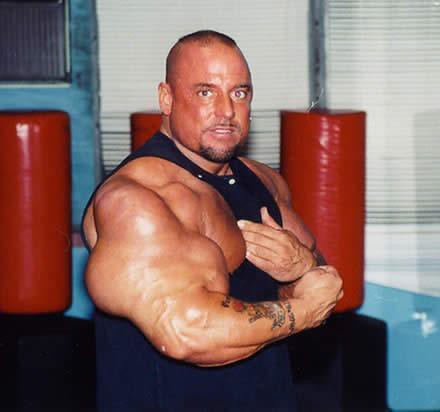
Then you see people who look like this, who are so far outside the normal range that they can't possibly be achieving those results naturally.
I'm sure that some of them really are doing it through nothing but hard work and a good diet, but steroid abuse exists in a big way, particularly in professional bodybuilding.
AS results
I suppose I'm a day late with this, but yesterday was a big day for 16-18 year olds across the country - AS and A2 results day!
 Interestingly, this year was the first year since 1991 that the proportion of A* and A grades has decreased. The culprit for this huge rise in top grades is disputed, but generally blamed on one of two things: either we (as children in the UK) are genuinely getting clever, or it's getting easier to As and A*s. The latter of the two (so called "grade inflation") can come across as a bit old-man-ish, almost reminiscent of the three Yorkshiremen sketch, but it does have a point. Is it really possible that teaching standards across the whole country have risen so much that the percentage of people getting the top two grades has increased fourfold in as many decades?
Earlier in the year, schools across England were called out for choosing exam boards for subjects based on how easy it was to get top grades. Because the boards are all NGOs, they are motivated by profits, and so they want to make themselves more attractive to schools. The danger was that the exams were being dumbed down in order to gain more money for the boards.
One solution to this is to nationalise all the boards. It's a bit drastic, obviously, and would lead to copious new problems, as all nationalisation does, but if there was no competition between them, then there would be no incentive to making the exams easier. At the same time, if there was only one super-board, there would be no choice about the syllabus, so it would put a lot of power in the government's hands - educating children in a way that benefits a particular party is not unheard of in politics.
In light of that, I wonder if we're seeing this decrease because the system is under more scrutiny now. Is this the end of grade inflation? A*s have already been added as a "new currency", and Ofqual, the regulator, has issued a warning that the increase in grades does need to be shown to be because of an actual increase in quality of work. At the same time, it's a marginal decrease and it is only one year. This is by no means an established trend.
Anyway I got AAAA. Woooooo! And at least an A in maths A2, but I might retake some modules to try and push that up to an A* next year.

Earlier in the year, schools across England were called out for choosing exam boards for subjects based on how easy it was to get top grades. Because the boards are all NGOs, they are motivated by profits, and so they want to make themselves more attractive to schools. The danger was that the exams were being dumbed down in order to gain more money for the boards.
One solution to this is to nationalise all the boards. It's a bit drastic, obviously, and would lead to copious new problems, as all nationalisation does, but if there was no competition between them, then there would be no incentive to making the exams easier. At the same time, if there was only one super-board, there would be no choice about the syllabus, so it would put a lot of power in the government's hands - educating children in a way that benefits a particular party is not unheard of in politics.
In light of that, I wonder if we're seeing this decrease because the system is under more scrutiny now. Is this the end of grade inflation? A*s have already been added as a "new currency", and Ofqual, the regulator, has issued a warning that the increase in grades does need to be shown to be because of an actual increase in quality of work. At the same time, it's a marginal decrease and it is only one year. This is by no means an established trend.
Anyway I got AAAA. Woooooo! And at least an A in maths A2, but I might retake some modules to try and push that up to an A* next year.
Saturday, 11 August 2012
Medlink pathology project results
I've just seen the results for the paper I wrote on in vitro meat production and I got a distinction! Woooooo!
For people who actually want to read the paper, I'll put it after the break.
For people who actually want to read the paper, I'll put it after the break.
Sunday, 5 August 2012
Explanation of simple harmonic motion as an example of problem based learning
After exams were over this term, students doing further maths in Abingdon have the opportunity of doing a maths project. Given two weeks, we are asked to find a topic related to maths that interests us, and that we can give a presentation on afterwards. I decided to choose a simple example of a dynamical system, because they are often used to model biological phenomenon. As it happens, the topic I chose wasn't as simple as I thought, but here's how it works, from basic maths upwards:
(warning: huge post)
(warning: huge post)
Monday, 30 July 2012
Blood pressure continued
Part two: why do we need such high blood pressure?
So we have seen how blood pressure can be used as an indicator of largely chronic effects, and that it is a very useful measurement to keep track of. But what about the more acute side of medicine?
I was lucky enough to stay in cardiothoracic critical care in my local hospital for a while as part of a work experience scheme with a consultant anaesthetist (a very underrated speciality, I have decided). While I was there, I noticed that they were measuring blood pressure on almost every patient. None of the people on the ward was there for chronic problems, so why were they bothering to measure the blood pressure?
The answer is that they needed to see whether the heart was working properly, as almost everyone there had just been in or was about to go into surgery for a heart operation. If the heart is pumping blood around the body, it will push against the outside of the arterial walls, which is what we call blood pressure. If the pressure decreases, it is likely that the heart is not pumping the blood so well, and the patient might need to be looked at in more detail.
But that is a very crude way of getting a very vague answer. What I wanted to know was what the blood pressure actually signified about the heart that the doctors were interested in. When I asked the consultant this, he answered me with another question: why do we need such high blood pressure? I'll admit, I didn't understand the question when he first asked me it.
My first thought was that some of the organs need high blood pressure, such as the kidneys: in the nephron, blood needs to be at high pressure in order to undergo ultrafiltration. But there are very few bits of the body that are like that, so it doesn't make sense to have the whole system running under unnecessary stress. What could be the advantage of having high pressure in the system? Does it have an advantage in itself? No. The advantage of running any fluid system at high pressure is to make the fluid move fast. That's what really matters: how quickly can the blood transport the necessary nutrients to the organs, and take away the waste products.
Again, I thought I'd got it, that we needed to run at such high pressure in order to move the blood around our body fast enough to work properly. Sadly for me, it turns out that the pressure needed to move the blood around our body is much lower than the average blood pressure. All I'd done was work out the question: why do we have such high blood pressure, when the same blood flow could be achieved with much lower pressure?
Looking at it from a purely physical standpoint, it makes no sense that two different pressures in the same system can provide the same blood flow. Where is the pressure being lost? There must be some kind of resistance that we are artificially providing in order to keep flow lower than its maximum. The pressure could be coming from the organs, or the arteries. We already know that only a few organs need the maximum pressure, so it must be coming from the arteries before the blood reaches the tissue it's going to. That can easily be provided by the muscle layer in the vessels, but I still hadn't worked out why it happened, just how it happened.
Why would the body have adapted to provide more resistance in the vascular system, making more work for the heart? Because it's not a fixed system: the muscles in the arteries can relax, reducing the pressure for various tissues, increasing the flow to those organs. This means when any tissue needs to increase the rate it gets its nutrients, the resistance of the vessels supplying that tissue can drop, which makes the flow spike immediately.
So to answer the question, we need high blood pressure so that blood flow to any part of the body can be increased straight away. That doesn't really explain why they measure blood pressure. That'll be in part three.
So to answer the question, we need high blood pressure so that blood flow to any part of the body can be increased straight away. That doesn't really explain why they measure blood pressure. That'll be in part three.
Blood pressure
Part one: problems with extreme blood pressures
As a culture, one of the facets of medicine we're obsessed with is blood pressure. This makes sense: hypertension in particular is a big problem in the obese western world, and hypotension can be equally as serious. It's also very easy to measure, using the fantastically named sphygmomanometer, or blood pressure cuff, of which every GP has at least one.Hypertension (high blood pressure)
Blood pressure is defined as how hard the blood is pushing against the arteries as it is moved around the body. Arteries have adapted to compensate for being pushed against by developing a layer of elastic tissue, so they can stretch with different pressures. Unfortunately, these elastic layers are not adapted to deal with very high blood pressure, when they are being stretched constantly. Like an elastic band, if you stretch an artery too much and too often, it stops becoming elastic. In the case of arteries, they harden (ateriosclerosis, not to be confused with but similar to atherosclerosis, which is also to do with cholesterol and a build up of fatty substances). Because the arteries harden, the pressure of the blood continues to be high until it reaches the arterioles, which are not developed for that pressure at all, so they burst.
This is a problem particularly in organs like the brain, where a burst blood vessel increases the pressure of the whole cranium hugely, and can leave permanent damage.
Hypertension also leads to heart failure, because the coronary arteries harden, so when more blood to the heart is needed (e.g. running for the bus), they cannot expand to allow that amount of flow, so the heart doesn't get enough glucose or oxygen, so parts of it die; which is a heart attack. Obviously that's a problem. The other way high blood pressure leads to a heart attack is that the left ventricle has to work harder to pump the blood around the body at a higher pressure, so the muscle thickens (hypertrophy). Because the muscle is thicker, it requires more oxygen and gluscose, so the same thing happens as when above.
The reason this is important in the western world is because we are increasingly ticking more and more risk factor boxes: the population is aging, becoming fatter, drinking and smoking. It can also be unsymptomatic for a long time before a huge event happens, so it is important to measure even apparently healthy people.
This is a problem particularly in organs like the brain, where a burst blood vessel increases the pressure of the whole cranium hugely, and can leave permanent damage.
Hypertension also leads to heart failure, because the coronary arteries harden, so when more blood to the heart is needed (e.g. running for the bus), they cannot expand to allow that amount of flow, so the heart doesn't get enough glucose or oxygen, so parts of it die; which is a heart attack. Obviously that's a problem. The other way high blood pressure leads to a heart attack is that the left ventricle has to work harder to pump the blood around the body at a higher pressure, so the muscle thickens (hypertrophy). Because the muscle is thicker, it requires more oxygen and gluscose, so the same thing happens as when above.
The reason this is important in the western world is because we are increasingly ticking more and more risk factor boxes: the population is aging, becoming fatter, drinking and smoking. It can also be unsymptomatic for a long time before a huge event happens, so it is important to measure even apparently healthy people.
Hypotension (low blood pressure)
In some people, who exercise a lot, low pressure is a sign of good health and fitness. It can also be caused temporarily by alcohol, other drugs, or a postural change, among others. Mostly, it is harmless.
However, in acute and extreme circumstances, where hypotension is caused by blood loss or heart failure, it becomes very harmful. The brain (as well as other organs) doesn't get enough blood, which contains the glucose and oxygen it needs to survive, so it begins to die. This is a state called shock, which can be life-threatening. The loss of volume of blood is not always as obvious as a bleed; dehydration by diarrhoea or insufficient fluid intake can also cause hypotension, but this is likely to be less serious.
Sunday, 29 April 2012
GP Work Experience
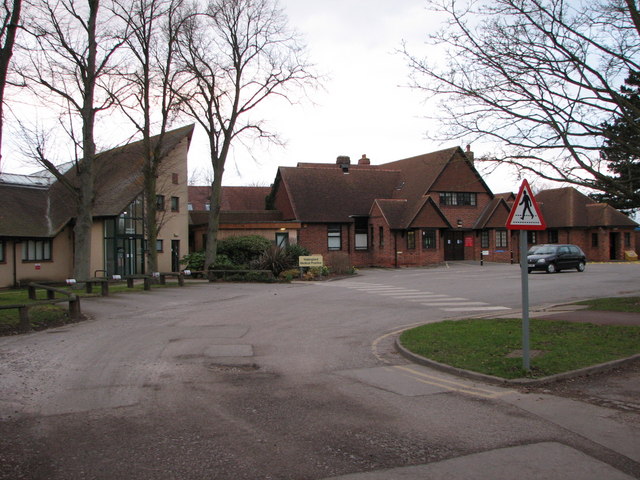
This is Wallingford Medical practice. It's a building on the side of a small stream in a town just a few miles from a train station which is two stops from my station. To the right of the picture, there's a community hospital, including a maternity ward. My week's work experience was spent mainly in the consultation rooms, but I did get to see the hospital too; thanks to everyone's hospitality, I managed to see pretty much everything.
Work starts early in GP practices; I knew that already in theory, but the reality is coffee and morning discipline. Which I actually enjoyed - getting up to do something you are really looking forward to is a great feeling.
One difference between salary doctors and partners is that partners have to work the hours to finish the work, and salary doctors only have to work the hours they're paid. I was shadowing a partner, so I was in bright and early, and was allowed to sit in on the practice meeting. Practice meetings are great at showing the business side of the general practice, something that is not so prevalent in other areas of the NHS, and it gave me an insight into how everyone worked as a team, despite spending most of their days shut off from each other in their rooms. The other thing I gleaned from the meetings was that no matter how many years you've been a doctor, there's always more to learn. In the practice meeting, two doctors were asking for study leave to go on different courses to learn about more in fields they're interested in, and in another meeting, a consultant physiotherapist came and talked about what she did and how GPs can help (when to refer, what to expect etc.).
Each day is split into morning surgery, then coffee, then visits, then lunch (meetings and paperwork), then afternoon surgery. There is also ward rounds of the hospital (which I got to shadow on the last day) in the morning, to check up on patients in the wards and reissue any drugs that needed a new prescription for.
It's hard to pick a favourite part of GP work, because each patient is so different that it's difficult to generalise. I'll probably post one or two of the cases I thought were the most interesting as individual blog posts, but the thing I noticed the most, in visits and in consultations, and in the hospital, was how much the atmosphere was moulded around the patient. Every person was different - an excited visit from an expecting young mum, a calm talk about testicles with a nervous teenage boy, a veeeerryy sloowww conversation with a depressed woman - I could go on.
The relationship with the doctor is also different each time, and that's one of the challenges of general practice, I think, because you don't only have to have gone through umpteen years of medical training and have the responsibility of looking after all of your patients, but also you have to be able to communicate with whoever walks through that door. Communication is different to making friends with, as well. In a lot of cases, it would be easy to let the patient tell you what they think is wrong with them and exactly what drugs they want, write a prescription, and let them go. But often, that's not what's needed, and it can be hard to tell someone that they need nothing at all, or a different treatment, or tests. Cooperation is important, and the needs of the patient come first, but a confident, misinformed person could be more of a danger to themselves than the disease they have.
I'll post more about GP work later, but this post is long enough. Bite sized work experience!
Wednesday, 11 April 2012
WOOO!
Finally finished my 2011 in science series. That took a LOT longer than expected. But now that means I am free to post whatever I want!
I have just finished a week's work experience in a GP surgery, which was fantastic, so I'm sure the next few posts will be devoted to that. Also making an Easter resolution to add pictures to my blags so they look less boring.
I have just finished a week's work experience in a GP surgery, which was fantastic, so I'm sure the next few posts will be devoted to that. Also making an Easter resolution to add pictures to my blags so they look less boring.
December: Microbots and Mutants
Okay, so the title is a bit of a lie. Again. But scientists did manage to grow eyes on the side of tadpoles' heads. Which pretty much makes them mutants. Why did they do this to the poor baby frogs? Well, it revealed an entirely new form of control over the formation of organs in the body. By altering voltage gradients, they were able to produce eyes in parts of the body that would never normally have eyes. While this may not have any clinical applications, it is an interesting find in the world of embryology.
Nanorobots were also new to the world in December. These are small (<1mm) machines that can be steered using magnets to the right place in the giant 3D maze of the circulatory system to detect disease and deliver the drugs needed. They have been in the pipeline since 2007, but development started in December last year.
In other science: 2 earth size exoplanets and 1 hospitable exoplanet in the Kepler system (Kepler-20e, 20f, and 22b respectively); engineers at MIT make a camera with 1 trillion frames per second, fast enough to capture light travelling across surfaces, and a potential vaccine for HIV goes into production.
Nanorobots were also new to the world in December. These are small (<1mm) machines that can be steered using magnets to the right place in the giant 3D maze of the circulatory system to detect disease and deliver the drugs needed. They have been in the pipeline since 2007, but development started in December last year.
In other science: 2 earth size exoplanets and 1 hospitable exoplanet in the Kepler system (Kepler-20e, 20f, and 22b respectively); engineers at MIT make a camera with 1 trillion frames per second, fast enough to capture light travelling across surfaces, and a potential vaccine for HIV goes into production.
November: elderly embryos and erotica
This month in stem cell news: induced pluripotent cells were created from people as old as 101, a feat which was previously thought impossible due to the ageing process of living organisms. The elderly stand to gain the most from therapies involving stem cells, so the news that they might be able to culture their own could open up new doors in regenerative medicine. Or it could confuse us even more about ageing. Stem cells were also coaxed into specialising into the dopamine producing cells that are damaged in Parkinson's disease early in the month.
On the slightly less serious side of medicine, a woman masturbated in an MRI scanner. Kayt Sukel stimulated herself to orgasm while held still in the device so that her brain activity could be monitored. It's hoped that the data might help both men and women who have problems climaxing, and also that it might offer an insight into how we feel happy.
In other science: a one molecule "car" is built; Scottish engineers start to sell their bionic legs, and the six men put into isolation 520 days previously to simulate a trip to Mars are released.
On the slightly less serious side of medicine, a woman masturbated in an MRI scanner. Kayt Sukel stimulated herself to orgasm while held still in the device so that her brain activity could be monitored. It's hoped that the data might help both men and women who have problems climaxing, and also that it might offer an insight into how we feel happy.
In other science: a one molecule "car" is built; Scottish engineers start to sell their bionic legs, and the six men put into isolation 520 days previously to simulate a trip to Mars are released.
Wednesday, 22 February 2012
October: Millions of people, malaria, and maybe cloning?
October 18th was a bad day for Malaria, which means it was a great day for the rest of the world. On the same day that WHO announced a worldwide drop by 20% of deaths from malaria, signalling the downfall of one of the world's biggest killers, a malaria vaccine was reported to be successful. In the trial, including 15,000 children, the participants had about half the risk of getting the disease as those without the vaccine. Malaria kills 655,000 people per year, and the work towards eradicating it is a long and arduous task, so good news such as this is always welcome. By the time I will (hopefully) be training to be a medic, it is estimated that another 8-10 countries will have rid themselves of it; hopefully it will follow the same path as polio - a disease which had had no new cases in India, one of the previous hotspots, for 9 months by October 2011.
Stem cells again featured in the headlines for October, this time for their production. Dolly the sheep made somatic cell nuclear transfer famous when she was the first mammal to be cloned in the late 90's; this method had been used since then to try and clone humans so that embryonic stem cells might be made without actual fertilisation of an egg by a sperm cell. However, the embryos produced in this method, which involves taking the nucleus out of an egg and inserting the genetic material of an adult cell (not a sex cell) in order to gain a genetically identical replica of the original adult, did not divide further than 6-12 cells. In order to bypass this method, a team in New York tried a new method: the genetic material of the adult would still be inserted, but this time without first enucleating the egg. This allowed the cell to develop into a blastocyst, where the embryonic stem cells are formed. However, because there was the nucleus of both the adult cell (containing 2 'sets' of chromosomes) and the nucleus of the egg (containing 1 'set' of chromosomes), there was then three of each chromosome. Which, sadly, means that the technique is not quite ready for use in medicine, as it doesn't yet produce cells with only the genes of the donor, and there may be problems with the chromosome numbers. Definitely a technique to watch in the future, as the use of stem cells edges closer towards the mainstream.
In other science: 7 billion people are living on the planet, according to the UN, the dwarf planet Eris is apparently just as big as Pluto, and a study suggests that exercise is just as good as drugs at preventing migranes.
Stem cells again featured in the headlines for October, this time for their production. Dolly the sheep made somatic cell nuclear transfer famous when she was the first mammal to be cloned in the late 90's; this method had been used since then to try and clone humans so that embryonic stem cells might be made without actual fertilisation of an egg by a sperm cell. However, the embryos produced in this method, which involves taking the nucleus out of an egg and inserting the genetic material of an adult cell (not a sex cell) in order to gain a genetically identical replica of the original adult, did not divide further than 6-12 cells. In order to bypass this method, a team in New York tried a new method: the genetic material of the adult would still be inserted, but this time without first enucleating the egg. This allowed the cell to develop into a blastocyst, where the embryonic stem cells are formed. However, because there was the nucleus of both the adult cell (containing 2 'sets' of chromosomes) and the nucleus of the egg (containing 1 'set' of chromosomes), there was then three of each chromosome. Which, sadly, means that the technique is not quite ready for use in medicine, as it doesn't yet produce cells with only the genes of the donor, and there may be problems with the chromosome numbers. Definitely a technique to watch in the future, as the use of stem cells edges closer towards the mainstream.
In other science: 7 billion people are living on the planet, according to the UN, the dwarf planet Eris is apparently just as big as Pluto, and a study suggests that exercise is just as good as drugs at preventing migranes.
Friday, 13 January 2012
September: Harvesting Stem Cells and Hydrogen Cars
I've been writing a lot about the new and exciting capabilities of stem cells, but without a big enough supply of them, there is no hope that any of the treatments will ever be applied. When left to their own devices on a plastic culture dish, they do reproduce, but rather than into the useful pluripotent stem cells, they create other body cells, which cannot be used in therapies. So when, in September, a new type of plastic was devised that allowed stem cells to grow and still keep their characteristics, it got us one step closer to the clinical use of these new treatments.
Following on from August's discovery of an enzyme that produces hydrogen from water, the start of the new school year also was the start of MEC technology, or Microbial Electrolysis Cells. Osmotic power stations already capitalise on the potential difference between salt- and freshwater, but these new cells also add a bacteria that produces hydrogen gas to create a self sustaining, relatively cheap method of producing hydrogen for use in cars and other technologies.
In other science: a detector is released that can tell when we're lying, blood vessels are printed on a 3D printer, and a single molecule motor is engineered.
Following on from August's discovery of an enzyme that produces hydrogen from water, the start of the new school year also was the start of MEC technology, or Microbial Electrolysis Cells. Osmotic power stations already capitalise on the potential difference between salt- and freshwater, but these new cells also add a bacteria that produces hydrogen gas to create a self sustaining, relatively cheap method of producing hydrogen for use in cars and other technologies.
In other science: a detector is released that can tell when we're lying, blood vessels are printed on a 3D printer, and a single molecule motor is engineered.
Subscribe to:
Posts (Atom)